

Brass Rods
Brass is essentially copper alloyed with zinc. It is strong but easy to form, stamp, or draw, making it a common choice for a broad spectrum of applications. By varying the amount of zinc content, it is possible to achieve a variety of characteristics, including different levels of corrosion resistance, ductility, and suitability for machining.
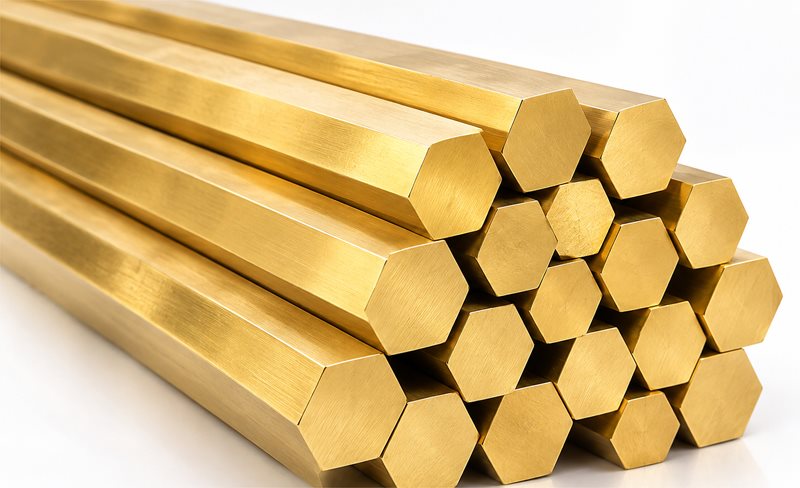
Bright Metals manufactures and supplies brass rods as per customer's drawing, in the shapes and size ranges below.
Shapes & Size Range
| Shape | Size Range |
|---|---|
| Solid Round Bars | Dia 10 mm up to 120 mm |
| Solid Hex Bars | A/F 10 mm up to 120 mm |
| Solid Square Bars | A/F 10 mm up to 120 mm |
| Solid Rectangle Bars | A/F 6x25 mm up to 150x50 mm |
| Hollow Bars (tubes) | Outer dia: Round, Hex & Square, 30 mm up to 120 mm. Inner dia: Round, 20 mm up to 107 mm |
| Bar Length | Up to 4 meters. Delivery condition: As Extruded or Cold Drawn |
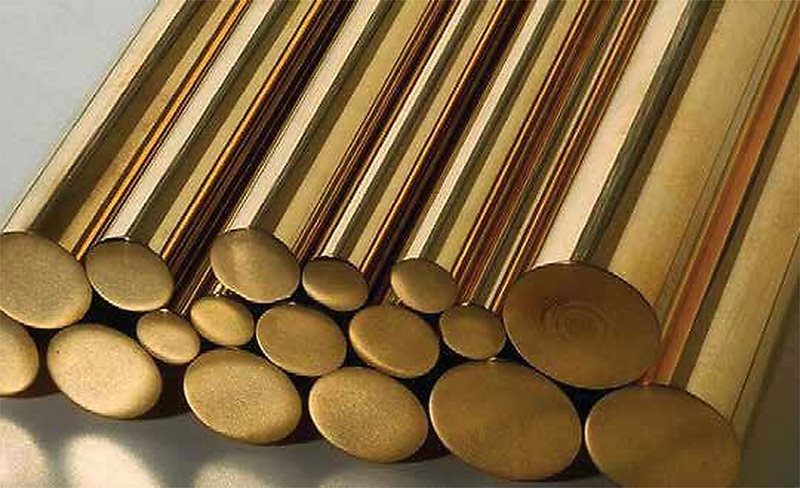
Solid Round Bars
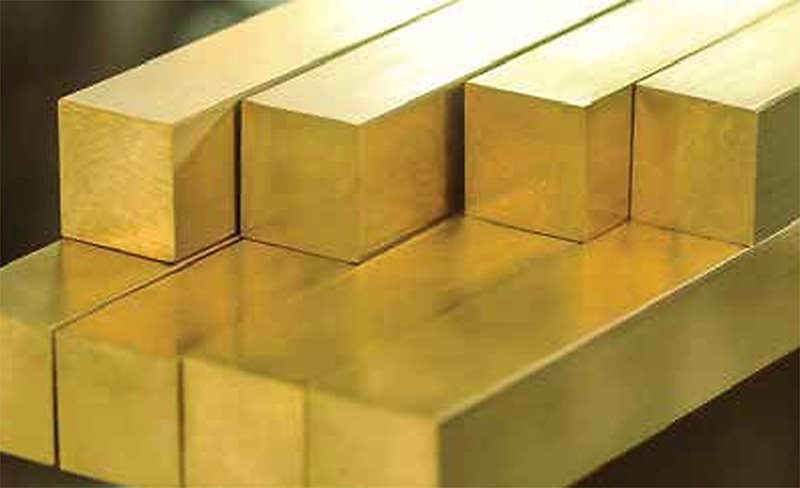
Solid Square Bars
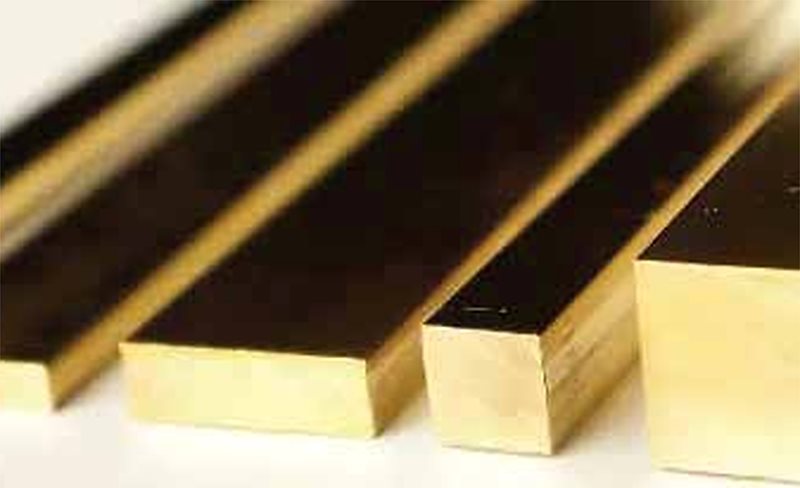
Solid Rectangle Bars
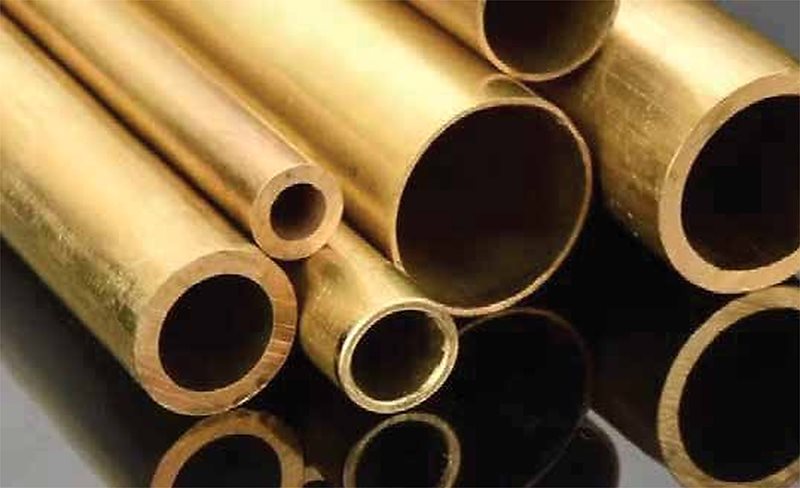
Hollow Bars
Brass Rod Alloy Grades
Jump to an alloy family. All values are % by weight; Rem. = remainder, - = not controlled for that grade.
Free Machining Brass Rods
Brass is essentially copper alloyed with zinc. It is strong but easy to form, stamp, or draw, making it a common choice for a broad spectrum of applications. By varying the amount of zinc content, it is possible to achieve a variety of characteristics, including different levels of corrosion resistance, ductility, and suitability for machining.
| Grade | Cu | Pb | Fe | Mn | Al | Sn | Ni | Zn | Others |
|---|---|---|---|---|---|---|---|---|---|
| C-36000 | 60.0 - 63.0 | 2.5 - 3.0 | 0.0 - 0.35 | - | - | - | - | Rem. | 0.5 |
| C3601 | 59.0 - 63.0 | 1.8 - 3.7 | 0.0 - 0.3 | - | - | - | - | Rem. | 0.5 |
| C3602 | 59.0 - 63.0 | 1.8 - 3.7 | 0.0 - 0.5 | - | - | - | - | Rem. | 1.0 |
| C3603 | 57.0 - 61.0 | 1.8 - 3.7 | 0.0 - 0.35 | - | - | - | - | Rem. | 0.6 |
| C3604 | 57.0 - 61.0 | 1.8 - 3.7 | 0.0 - 0.5 | - | - | - | - | Rem. | 1.0 |
| CuZn39Pb3 | 57.0 - 59.0 | 2.5 - 3.5 | 0.0 - 0.3 | - | 0.0 - 0.05 | 0.0 - 0.3 | 0.0 - 0.3 | Rem. | 0.20 |
| CW603N | 60.0 - 62.0 | 2.5 - 3.5 | 0.0 - 0.3 | - | 0.0 - 0.05 | 0.0 - 0.2 | 0.0 - 0.3 | Rem. | 0.20 |
| CW614N | 57.0 - 59.0 | 2.5 - 3.5 | 0.0 - 0.3 | - | 0.0 - 0.05 | 0.0 - 0.3 | 0.0 - 0.3 | Rem. | 0.20 |
| CZ121Pb3 | 57.0 - 59.0 | 2.5 - 3.5 | 0.0 - 0.3 | - | 0.0 - 0.05 | 0.0 - 0.3 | 0.0 - 0.3 | Rem. | 0.20 |
| CZ124 | 60.0 - 63.0 | 2.5 - 3.7 | 0.0 - 0.3 | - | - | - | - | Rem. | 0.50 |
| IS :319Gr-1 | 56.0 - 59.0 | 2.0 - 3.5 | 0.0 - 0.35 | - | - | - | - | Rem. | 0.70 |
| IS :319Gr-2 | 60.0 - 63.0 | 2.5 - 3.7 | 0.0 - 0.35 | - | - | - | - | Rem. | 0.50 |
Forging Brass Rods
Forging brass is a copper and zinc alloy with adjustable properties that allow for diverse mechanical and electrical characteristics. It's an interchangeable alloy, where the constituent atoms can replace one another within the identical crystal structure. Shaping forging brass is straightforward, and it boasts remarkable thermal conductivity and exceptional hot forgeability attributes. These alloys are obtainable in rod form.
| Grade | Cu | Pb | Fe | Mn | Al | Sn | Ni | Zn | Others |
|---|---|---|---|---|---|---|---|---|---|
| C-3771 | 57.0 - 61.0 | 1.0 - 2.5 | - | - | - | - | - | Rem. | 1.00 |
| CW608N | 60.0 - 61.0 | 1.6 - 2.5 | 0.0 - 0.2 | - | 0.0 - 0.05 | 0.0 - 0.2 | 0.0 - 0.3 | Rem. | 0.20 |
| CuZn38Pb1 | 60.0 - 61.0 | 0.8 - 1.6 | 0.0 - 0.2 | - | 0.0 - 0.05 | 0.0 - 0.2 | 0.0 - 0.3 | Rem. | 0.20 |
| CuZn38Pb2 | 60.0 - 61.0 | 1.6 - 2.5 | 0.0 - 0.2 | - | 0.0 - 0.05 | 0.0 - 0.2 | 0.0 - 0.3 | Rem. | 0.20 |
| CuZn40Pb2 | 57.0 - 59.0 | 1.6 - 2.5 | 0.0 - 0.3 | - | 0.0 - 0.05 | 0.0 - 0.3 | 0.0 - 0.3 | Rem. | 0.20 |
| Cw612N | 59.0 - 60.0 | 1.6 - 2.5 | 0.0 - 0.3 | - | 0.0 - 0.05 | 0.0 - 0.3 | 0.0 - 0.3 | Rem. | 0.20 |
| Cw617N | 57.0 - 59.0 | 1.6 - 2.5 | 0.0 - 0.3 | - | 0.0 - 0.05 | 0.0 - 0.3 | 0.0 - 0.3 | Rem. | 0.20 |
| IS 6912-FLB | 56.5 - 60.0 | 0.6 - 2.0 | 0.0 - 0.3 | - | - | - | - | Rem. | 0.75 |
| IS 8737 | 56.0 - 60.0 | 1.0 - 2.0 | 0.0 - 0.3 | 0.00 - 0.5 | - | - | - | Rem. | 0.75 |
Leaded Brass Rods
The incorporation of lead into brass contributes to its enhanced machinability, along with increased strength and improved resistance to corrosion. This lead addition also aids in sealing shrinkage pores, resulting in enhanced pressure tightness. The lead content in brass can extend up to 3.5 percent, leading to classifications of low, medium, or high-leaded compositions.
APPLICATIONS: Screws, valves, fittings, bearings, specialty fasteners, architectural hardware, and general-purpose machine parts.
| Grade | Cu | Pb | Fe | Mn | Al | Sn | Ni | Zn | Others |
|---|---|---|---|---|---|---|---|---|---|
| C-3712 | 58.0 - 62.0 | 0.25 - 1.2 | - | - | - | - | - | Rem. | 0.80 |
| CW601N | 62.0 - 63.5 | 1.6 - 2.5 | 0.0 - 0.1 | - | 0.0 - 0.05 | 0.0 - 0.1 | 0.0 - 0.3 | Rem. | 0.10 |
| CW602N | 61.0 - 63.0 | 1.7 - 2.8 | 0.0 - 0.1 | 0.0 - 0.1 | 0.0 - 0.05 | 0.0 - 0.1 | 0.0 - 0.3 | Rem. | 0.10 |
| CW605N | 61.0 - 62.5 | 0.8 - 1.6 | 0.0 - 0.3 | - | 0.0 - 0.05 | 0.0 - 0.3 | 0.0 - 0.3 | Rem. | 0.20 |
| CW607N | 60.0 - 61.0 | 0.8 - 1.6 | 0.0 - 0.2 | - | 0.0 - 0.05 | 0.0 - 0.2 | 0.0 - 0.3 | Rem. | 0.20 |
| CW610N | 59.0 - 60.5 | 0.2 - 0.8 | 0.0 - 0.2 | - | 0.0 - 0.05 | 0.0 - 0.2 | 0.0 - 0.3 | Rem. | 0.20 |
| CW611N | 59.0 - 60.0 | 0.8 - 1.6 | 0.0 - 0.3 | - | 0.0 - 0.05 | 0.0 - 0.3 | 0.0 - 0.3 | Rem. | 0.20 |
| CW612N | 59.0 - 60.0 | 1.6 - 2.5 | 0.0 - 0.3 | - | 0.0 - 0.05 | 0.0 - 0.3 | 0.0 - 0.3 | Rem. | 0.20 |
| DTD:627 | 61.0 - 63.0 | 1.5 - 2.5 | 0.0 - 0.2 | - | - | - | - | Rem. | 0.50 |
Lead Free Brass Rods
Lead-free brass exhibits relatively robust corrosion resistance, moderately high strength, and, in certain variations, excellent ductility. When used in hot forms, it boasts considerable strength. This material is also commonly referred to as Muntz metal. It can be found in various copper-zinc ratios, including 60/40, 63/37, 65/35 and 70/30 Cu/Zn, and is a ductile alloy.
APPLICATIONS: Blanking, riveting, bending, hot forging, and pressing.
| Grade | Cu | Pb | Fe | Mn | Al | Sn | Ni | Zn | Others |
|---|---|---|---|---|---|---|---|---|---|
| CW510L | 57.0 - 59.0 | 0.0 - 0.2 | 0.0 - 0.3 | - | 0.0 - 0.05 | 0.0 - 0.3 | 0.0 - 0.3 | Rem. | 0.20 |
| CW511L | 61.5 - 63.5 | 0.0 - 0.2 | 0.0 - 0.1 | - | 0.0 - 0.05 | 0.0 - 0.1 | 0.0 - 0.1 | Rem. | 0.20 |
| IS 4413 | 62.0 - 65.0 | 0.0 - 0.3 | 0.0 - 0.1 | - | - | - | - | - | 0.60 |
Naval Brass Rods
Naval brass, a renowned marine alloy, is characterized by its robustness, high strength, and resistance to corrosion. Comprising roughly 60 percent copper, 0.75 percent tin, and 39.2 percent zinc, this alloy embodies the quintessential maritime material. The inclusion of tin further imparts exceptional resistance to dezincification. With commendable strength and rigidity, naval brasses are acknowledged for their remarkable resistance to wear, fatigue, and stress corrosion cracking.
APPLICATIONS: Marine construction, fulfilling the demand for durable, corrosion-resistant, and hard materials in both saltwater and freshwater environments.
| Grade | Cu | Pb | Fe | Mn | Al | Sn | Ni | Zn | Others |
|---|---|---|---|---|---|---|---|---|---|
| CW712R | 61.0 - 63.0 | 0.2 - 0.6 | 0.0 - 0.1 | - | - | 1.0 - 1.50 | 0.0 - 0.20 | Rem. | 0.20 |
| CW719R | 59.0 - 61.0 | 0.0 - 0.2 | 0.0 - 0.1 | - | - | 0.50 - 1.0 | 0.0 - 0.20 | Rem. | 0.20 |
| IS:291 Gr-1 | 61.0 - 64.0 | 0.0 - 0.2 | 0.0 - 0.1 | - | - | 1.0 - 1.50 | - | Rem. | 0.20 |
| IS:291 Gr-2 | 59.0 - 62.0 | 0.5 - 1.0 | 0.0 - 0.1 | - | - | 0.50 - 1.0 | - | Rem. | 0.20 |
Manganese Bronze Rods
Manganese bronze alloys include minor alloying elements such as manganese, iron, and aluminum, in addition to lead for enhancing lubricity, preventing seizing, and promoting bonding. Similar to aluminum bronze alloys, they offer a combination of impressive strength and exceptional resistance to corrosion. Manganese bronze bearings are well-suited for high-speed operations under substantial loads, but need shaft hardness and freedom from abrasive conditions. These alloys are widely used in the aerospace, fastener, marine, and oil and gas sectors.
APPLICATIONS: Landing gear parts, strut bushings, screw machine parts, various types of bearings, bushings, gears, and lead screw nuts.
| Grade | Cu | Pb | Fe | Mn | Al | Sn | Ni | Zn | Others |
|---|---|---|---|---|---|---|---|---|---|
| 6912 FHTB-I | 56.0 - 60.0 | 0.5 - 1.5 | 0.3 - 1.25 | 0.50 - 2.0 | 0.0 - 0.2 | 0.6 - 1.1 | - | Rem. | 0.50 |
| 6912 FHTB-II | 56.0 - 61.0 | 0.5 - 1.5 | 0.3 - 1.25 | 0.50 - 2.0 | 0.3 - 2.0 | 0.2 - 0.8 | - | Rem. | 0.50 |
| CW710R | 58.0 - 60.0 | 0.2 - 0.8 | 0.0 - 0.5 | 1.5 - 2.25 | 0.3 - 1.3 | 0.0 - 0.5 | 2.0 - 3.0 | Rem. | 0.70 |
| CW713R | 57.0 - 59.0 | 0.2 - 0.8 | 0.0 - 1.0 | 1.5 - 3.0 | 1.3 - 2.3 | 0.0 - 0.4 | 0.0 - 1.0 | Rem. | 0.30 |
| CW721R | 57.0 - 59.0 | 0.8 - 1.6 | 0.2 - 1.2 | 0.8 - 1.8 | 0.3 - 1.3 | 0.2 - 1.0 | 0.0 - 0.3 | Rem. | 0.20 |
| CW722R | 56.5 - 58.5 | 0.8 - 1.6 | 0.2 - 1.2 | 0.8 - 1.8 | 0.0 - 0.1 | 0.2 - 1.0 | 0.0 - 0.3 | Rem. | 0.20 |
| IS-320 HT-I | 56.0 - 60.0 | 0.2 - 1.5 | 0.2 - 1.25 | 0.25 - 2.0 | 0.0 - 0.2 | 0.2 - 1.0 | - | Rem. | 0.50 |
| IS-320 HT-II | 56.0 - 61.0 | 0.0 - 1.0 | 0.2 - 1.25 | 0.50 - 2.0 | 0.3 - 2.0 | 0.0 - 1.0 | - | Rem. | 0.50 |